

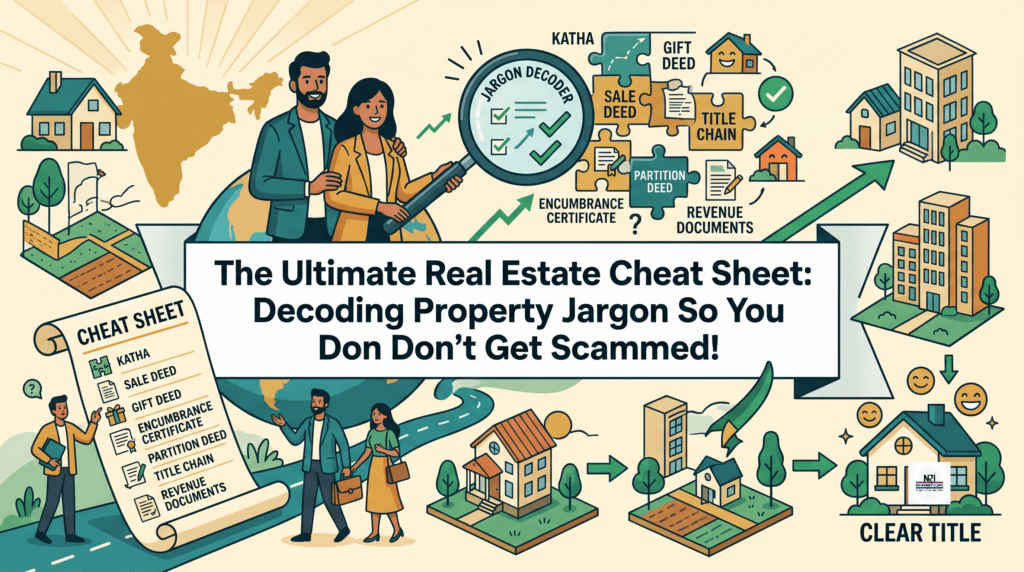
Buying a property is thrilling, but looking at a stack of legal real estate documents can quickly turn that thrill into a headache. Between Khatas, Deeds, and Certificates, it often feels like you need a law degree just to buy a house!
Don’t panic. We are slicing through the legal jargon to give you the ultimate, easy-to-understand breakdown of every document you actually need to know before handing over your life savings. Let’s dive in!
The Heavyweights: Sale Agreement vs. Sale Deed
These two are the absolute VIPs of property transactions, but buyers mix them up all the time.
1. Agreement to Sell (Sale Agreement)
- This is a preliminary contract outlining the terms, conditions, and promises for a future property sale.
- It outlines payment schedules, timelines, and obligations for both parties.
- Crucial Fact: A sale agreement never conveys the actual title or ownership of the property.
- To be legally enforceable in court, it must be adequately stamped (e.g., 0.5% of the property value in Karnataka), not just written on a ₹200 or ₹500 stamp paper.
- It should include highly customised default clauses, such as the forfeiture of the advance amount if the buyer defaults, or compensation if the seller backs out.
2. Sale Deed
- This is the final, ultimate legal document that officially transfers ownership from the seller to you.
- It contains buyer and seller information, a description of the property, and the final sale consideration.
- Even if you have paid the seller in full, your ownership is not legally complete until the Sale Deed is executed and registered.
Uncovering the Past: Titles, ECs, and Mother Deeds
You wouldn’t buy a used car without checking its history, right? Property requires the same detective work.
What is a “Clear Title”?
- A clear title means the property is entirely free from legal disputes, unpaid loans, liabilities, and ownership conflicts.
- It requires proper documentation across past transactions spanning the last 15 to 20 years.
- Reality Check: When a lawyer reviews your documents and says the title is clear, they are providing a professional opinion, not a legally binding guarantee. If you are making a large investment, getting a second legal opinion is always a smart move.
The Mother Deed & Title Chain
- The Mother Deed refers to the previous documents that prove the ownership of past owners.
- You must verify the uninterrupted, undisputed chain of title over the last 20 to 30 years to ensure there are no breaks or hidden claims.
Encumbrance Certificate (EC)
- Think of an EC like a bank statement for a property.
- It is issued by the sub-registrar’s office and records all registered transactions, loans, mortgages, or court attachments on the property over a specific period.
- Warning: It only shows registered transactions; unregistered disputes (like an equitable mortgage) will not show up here.
The Alphabet Soup: Khatas, RTCs, and Conversions
Here is where the biggest misconceptions lie: Revenue documents do not prove ownership!. They only show who is in possession of the property and who is paying the taxes.
Khata (The Municipal Record)
- A Khata is merely an administrative record maintained by local authorities (like BBMP or panchayats) used to pay property taxes and apply for utilities like electricity and water.
- A Khata: Indicates the property fully complies with all local regulations and approvals.
- B Khata: Indicates there are deviations, unauthorised layouts, or pending compliances on the property.
- e-Khata: To prevent fraud, Khatas are now issued electronically and linked to the property owner’s Aadhaar, making it mandatory with OTP verification for any future transactions.
RTC & DC Conversion
- RTC (Record of Rights, Tenancy, and Crops): This is essentially the Khata equivalent for agricultural land, detailing the owner’s name, crop details, area, and land classification.
- DC Conversion: If you are buying a plot on the outskirts of a city, the agricultural land must be officially converted for residential or commercial use by the Deputy Commissioner (DC). Without this, the layout is unauthorised.
The Golden Rule: Step Away From the Paperwork!
Documents can look crystal clear on a lawyer’s desk, but you must verify the physical reality.
- Bring a Measuring Tape: Go to the vacant plot and measure it yourself. A site that says 30×40 on the legal document might actually measure 28×38 in reality.
- Check the Amenities: For apartments, verify the water supply and drainage, and check with the association for any pending management dues.
- Demand Vacant Possession: Never register a sale deed while a tenant is still living in the property. Ensure it is completely vacant first.
Property investment is incredibly rewarding, but skipping due diligence can turn your dream home into a financial nightmare.
Ready to make a safe and secure property investment? Don’t navigate the legal maze alone! 📲 Click here to chat with our real estate experts on WhatsApp to get your property documents verified today!





No comment yet, add your voice below!